
Start with the bottle, not the front label
The front of a ready-to-drink protein shake is designed to catch your eye with big protein numbers and flavor names. The back panel is where the buying decision actually lives. Before you compare brands or commit to a multi-pack, turn the bottle around and answer four questions: How big is the serving? How much protein does that serving deliver? What else comes with it, especially sugar and fiber? And what does the storage claim actually mean for how you plan to use it?
This guide walks through those four checks in the order that matters for a real purchase. It uses the Oikos Protein Shake Exclusive Variety Pack as a concrete example of how label terms translate into practical expectations, so you can apply the same reading habit to any RTD shake on the shelf.
The four label checks that decide a purchase
Work through these in order. Each one narrows the field before you spend money on a pack you might not finish.
- 1. Confirm the serving size matches the bottle: A 12 fl oz bottle is not automatically one serving. Some RTD shakes list two servings per container, which doubles every number on the panel. Check whether the protein and fiber figures apply to the whole bottle or half of it. If the label says one serving per bottle, the numbers you see are what you drink in one sitting.
- 2. Read protein per serving, not per pack: The headline protein number should match the serving you just confirmed. A shake with 30g of protein per 12 fl oz bottle delivers that amount only if you drink the full bottle. If you plan to split bottles or pour half over ice, your actual protein intake is halved.
- 3. Check sugar and fiber together: Protein alone does not tell you how a shake fits your day. Look at the sugar grams and the fiber grams side by side. A shake with meaningful fiber may sit differently than a low-fiber shake with the same protein. Neither number is automatically good or bad; they simply tell you what you are getting in each bottle.
- 4. Interpret shelf-stable correctly: Shelf stable means the product is formulated to store without refrigeration before opening. It does not tell you how long it lasts after opening, whether it needs chilling for taste, or how it performs in heat. Those details come from the package directions, not the front-label claim.
What the Oikos variety pack label confirms
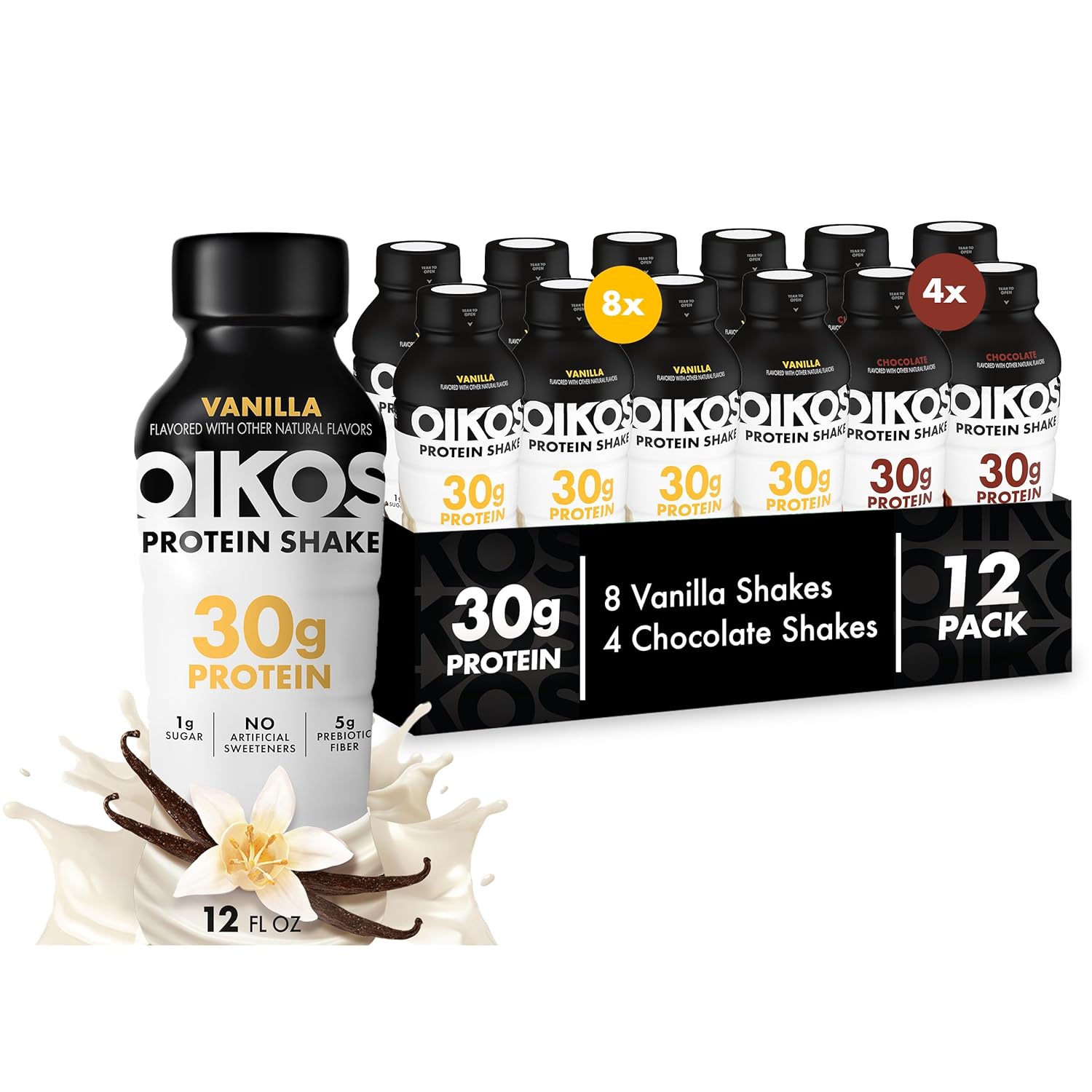
The Oikos Protein Shake Exclusive Variety Pack is a useful example because its core numbers are stated plainly: 30g of high-quality protein per 12 fl oz bottle, 5g of prebiotic fiber per serving, and a shelf-stable, ready-to-drink format. The pack contains 12 bottles total, split as 8 Vanilla and 4 Chocolate.
That combination answers the first three label checks in one pass. The serving is the full 12 fl oz bottle, the protein figure is tied to that bottle, and the fiber figure is stated per serving alongside it. What the supplied information does not include is a sugar gram count, a full ingredient list, or post-opening storage instructions. Those gaps are not flaws in the product; they are simply details you would confirm on the physical package before relying on them for a specific dietary plan.
Label facts that matter for this buying decision
- Oikos Protein Shake, Exclusive Variety Pack, 30g High Protein Drinks, Shelf Stable, Ready to Drink, 5g Prebiotic Fiber, 12 fl oz Bottle (8 ct Vanilla, 4 ct Chocolate: 30g of high-quality protein per 12 fl oz bottle This is the protein figure for the full bottle, so it tells you what one complete shake delivers without any serving-size math.

Oikos Protein Shake, Exclusive Variety Pack, 30g High Protein Drinks, Shelf Stable, Ready to Drink, 5g Prebiotic Fiber, 12 fl oz Bottle (8 ct Vanilla, 4 ct Chocolate - Oikos Protein Shake, Exclusive Variety Pack, 30g High Protein Drinks, Shelf Stable, Ready to Drink, 5g Prebiotic Fiber, 12 fl oz Bottle (8 ct Vanilla, 4 ct Chocolate: 5g of prebiotic fiber per serving Fiber is listed per serving alongside protein, which lets you compare the two numbers directly when deciding how the shake fits your day.
- Oikos Protein Shake, Exclusive Variety Pack, 30g High Protein Drinks, Shelf Stable, Ready to Drink, 5g Prebiotic Fiber, 12 fl oz Bottle (8 ct Vanilla, 4 ct Chocolate: Shelf stable and ready to drink This confirms the storage format before opening, which is the relevant claim for planning travel, desk drawers, or pantry stock.
- Oikos Protein Shake, Exclusive Variety Pack, 30g High Protein Drinks, Shelf Stable, Ready to Drink, 5g Prebiotic Fiber, 12 fl oz Bottle (8 ct Vanilla, 4 ct Chocolate: Exclusive variety pack with 8 Vanilla and 4 Chocolate bottles, 12 fl oz each, 12 bottles total The flavor split and bottle count tell you exactly what you are committing to before you buy a multi-pack.
Why sugar and fiber deserve a second look
Protein shakes are often marketed on protein alone, but the sugar and fiber numbers change how a bottle fits your routine. A shake with 5g of prebiotic fiber per serving is delivering something beyond protein, and that is worth knowing if you are choosing a shake for a midday snack versus a post-workout drink. Fiber can affect how full you feel and how the shake sits alongside other food.
Sugar is the other half of that equation. The supplied Oikos information does not state a sugar gram count, so this is a case where the label on the bottle is the only reliable source. If sugar is a deciding factor for you, check the panel before buying a 12-pack. The same applies to the full ingredient list and any allergen details: the supplied record confirms protein, fiber, format, and pack composition, but not those additional panels.
Single bottles vs. a 12-pack: what changes
The label reads the same whether you buy one bottle or twelve, but the buying decision does not. A variety pack lets you test two flavors and confirm the serving size works for you before committing to a larger supply.
- Buying a single bottle: Lowest commitment. You can confirm the serving size, taste the flavor, and check how the fiber and protein sit with you before buying more. The trade-off is higher cost per bottle and the risk of a store being out of stock.
- Buying the 12-bottle Oikos variety pack: The 8 Vanilla and 4 Chocolate split lets you rotate flavors, and the shelf-stable format means the pack does not need refrigerator space before opening. The trade-off is that you are committing to 12 bottles before you have tasted either flavor, so the label check matters more, not less.
What the label cannot tell you
A label is a starting point, not a full review. The supplied Oikos record does not include preparation instructions, post-opening storage guidance, allergen statements, or a sugar gram count. That does not mean those details are absent from the package; it means you should read the physical bottle before relying on them. The same discipline applies to any RTD shake: confirm the serving size, match the protein figure to that serving, and treat shelf-stable as a before-opening claim until the package says otherwise.
If you are choosing between a ready-to-drink shake and a powder, the label check is still the same four questions. The difference is that a bottle removes the mixing step and the shelf-stable format removes the refrigeration requirement before opening. Those are real conveniences, but they do not replace reading the panel.

