
Start with the serving size, not the front of the bottle
A keto-friendly label claim means little until you know what counts as one serving. The nutrition panel lists protein, carbohydrates, and sugars per serving, and a bottle may contain more than one. Before you compare two shakes, check whether the numbers refer to the whole bottle or half of it.
Once you have the serving size, look at total carbohydrates and added sugars. For a no added sugar protein drink, the added sugars line should read 0 g. That is a clearer signal than front-of-pack words like 'keto' or 'low carb,' which are not standardized.
A four-step label check for low-carb shakes
- 1. Confirm the serving size: Find the serving size at the top of the nutrition panel. If the bottle contains multiple servings, multiply the carbohydrate and protein numbers accordingly.
- 2. Read total carbohydrates and added sugars: Total carbohydrates include naturally occurring sugars and sugar alcohols. Added sugars are sweeteners added during manufacturing. For keto, a 0 g added sugars line is a useful checkpoint, but it does not guarantee the total carb count fits your daily limit.
- 3. Check for sugar alcohols: Sugar alcohols such as erythritol, maltitol, and xylitol appear in the ingredients list or in the total carbohydrate line. They are not added sugars, but they still count as carbohydrates on the label and can affect digestion. The label does not tell you how they affect your blood sugar, so treat them as a personal tolerance question.
- 4. Scan the ingredients for sweeteners: Ingredients are listed by weight. Look for syrups, cane sugar, honey, agave, or fruit juice concentrates. If a sweetener appears before the protein source, the product may contain more added sugar than the front label suggests.
Where added sugars hide in protein shakes
Added sugars are not always obvious from the flavor name. Banana, vanilla, and chocolate shakes can rely on natural flavors and sweeteners, but some use cane sugar, honey, or fruit juice concentrate. The nutrition panel's added sugars line captures these, while the ingredients list tells you which ones are present.
A no added sugar protein drink may still contain sugar alcohols or artificial sweeteners. Those are not added sugars, but they are carbohydrates. If you are tracking net carbs, subtract fiber and sugar alcohols from total carbohydrates only if your chosen keto approach allows it. The label does not calculate net carbs for you.
What a keto-friendly label looks like: Jocko Mölk Banana Cream
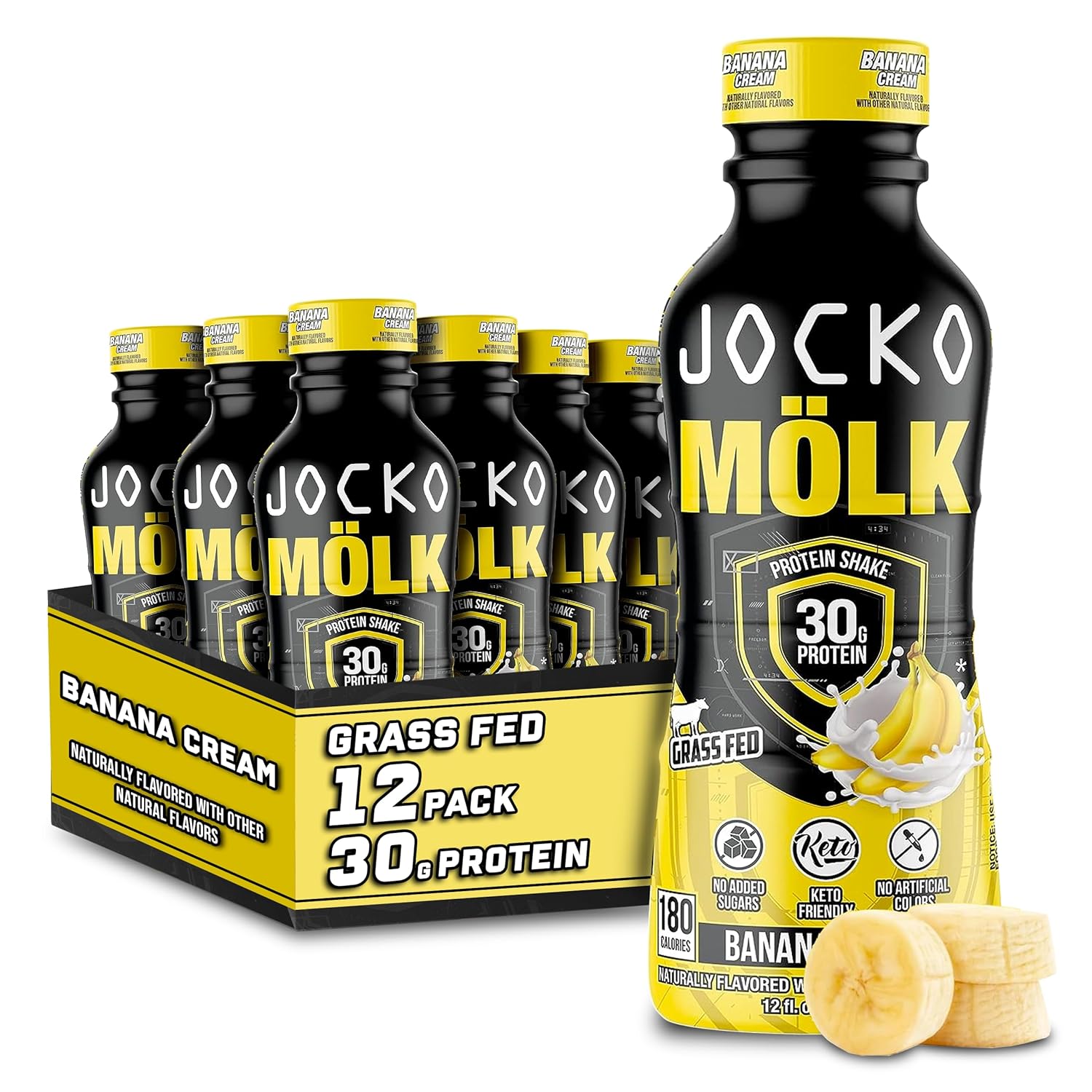
- Jocko Mölk 30g Grass Fed Protein Shakes – No Added Sugar Protein Drinks KETO Friendly - Ready to Drink 12 FL Oz (Pack of 12) Banana Cream: Jocko Mölk 30g Grass Fed Protein Shakes contain no added sugar and are described as KETO friendly. This gives you a concrete example of a ready-to-drink shake that meets the added-sugar checkpoint. Check the full nutrition panel for total carbohydrates and serving size before you rely on it for your daily carb budget.

Jocko Mölk 30g Grass Fed Protein Shakes – No Added Sugar Protein Drinks KETO Friendly - Ready to Drink 12 FL Oz (Pack of 12) Banana Cream - Jocko Mölk 30g Grass Fed Protein Shakes – No Added Sugar Protein Drinks KETO Friendly - Ready to Drink 12 FL Oz (Pack of 12) Banana Cream: Each 12 FL Oz bottle provides 30g of protein from grass-fed sources. Protein per bottle helps you compare shakes on a per-serving basis. A higher protein number can make a shake more filling, but it does not tell you the carbohydrate content.
- Jocko Mölk 30g Grass Fed Protein Shakes – No Added Sugar Protein Drinks KETO Friendly - Ready to Drink 12 FL Oz (Pack of 12) Banana Cream: The shake comes in a 12-pack of 12 FL Oz bottles in Banana Cream flavor. Buying a multi-pack means committing to one flavor and format. If you are new to sugar alcohols or a specific sweetener, try a single bottle first if available, or check the ingredients list for tolerance before stocking up.
Sugar alcohols and keto: what the label can and cannot tell you
Sugar alcohols are common in low-carb and keto products because they add sweetness with fewer calories than sugar. However, they are not calorie-free, and they are still carbohydrates. The nutrition label lists them separately under total carbohydrates, but it does not tell you their glycemic impact or your personal digestion threshold.
If you are new to sugar alcohols, start with a small serving and see how you feel. The label cannot predict whether a product will fit your keto macros or your gut. That is a trial-and-error step, not a label-reading step.
Before you buy a 12-pack, check these three things
First, confirm the serving size and total carbohydrates per bottle. A shake with 0 g added sugars can still contain several grams of total carbohydrates from sugar alcohols or naturally occurring sugars. Second, read the ingredients list for sweeteners you want to avoid. Third, consider whether you will drink the whole pack before it expires; ready-to-drink shakes have a limited shelf life, and the label will show a best-by date.
If you are comparing a grass fed protein shake keto option like Jocko Mölk with other brands, put the nutrition panels side by side. Look at protein, total carbohydrates, added sugars, and sugar alcohols per bottle. The front of the package is marketing; the panel is the data you can act on.

